Most salaried people believe their real money problems will begin later —
when salaries are higher, families are bigger, and responsibilities are heavier.
But the truth is far less dramatic.
For many, the most damaging financial mistake is made much earlier, quietly, during their twenties — when income feels small and time feels unlimited.
And by the time the consequences appear, it already feels too late to undo.
It’s Not About How Much You Earn
Low salary is often blamed for financial stress in the twenties.
But income alone is rarely the real issue.
In fact, many salaried professionals in their 20s have:
- Fewer responsibilities
- No dependents
- Lower fixed expenses
This phase offers something more valuable than money: flexibility.
Yet this flexibility is often wasted.
The mistake isn’t about earning too little.
It’s about not learning how money behaves early.
The “I’ll Get Serious Later” Mindset
This is where the problem truly begins.
Many salaried people treat their twenties like a financial waiting room:
- “I’ll save when my salary improves”
- “Planning can wait until my 30s”
- “Right now is the time to enjoy life”
Each thought sounds reasonable on its own.
Together, they quietly build habits that become difficult to break later.
What feels harmless at 24 becomes expensive at 34.
Why This Mistake Feels So Logical
This mindset doesn’t come from carelessness.
It comes from optimism.
In your twenties:
- Career growth feels guaranteed
- Income increases feel inevitable
- Time feels endless
Because the future looks promising, present decisions don’t feel urgent.
Unfortunately, money doesn’t respond to optimism.
It responds to patterns repeated over time.
The Compounding Effect Nobody Warns You About
Most people are taught about compounding returns.
Almost no one is warned about compounding behaviour.
Spending habits formed early rarely disappear.
They scale with income.
So when salaries increase later:
- Expenses rise automatically
- Lifestyle expectations expand
- Saving starts to feel restrictive
This is why many people earning well still feel financially trapped.
How EMIs Enter the Story Too Early
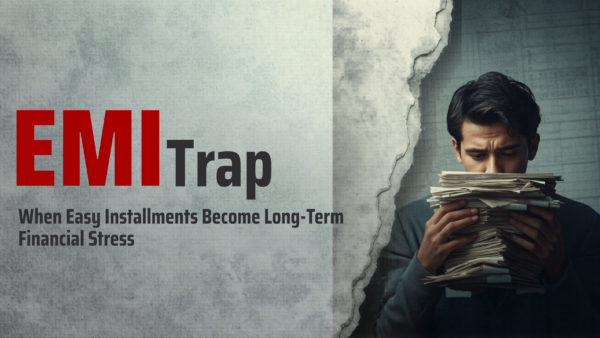
When saving feels optional, borrowing feels convenient.
EMIs make almost everything feel affordable:
- Phones
- Travel
- Lifestyle upgrades
Over time, future income starts getting spent before it is even earned.
The problem isn’t debt itself.
The problem is learning to depend on debt before learning discipline.
Why “Enjoy Your 20s” Is Often Misunderstood
Enjoyment and financial awareness are often treated as opposites.
They aren’t.
Financial discipline in your twenties doesn’t mean:
- Extreme frugality
- Missing experiences
- Living in fear
It simply means not delaying awareness.
Understanding money early makes enjoyment easier later — not harder.
What Actually Works (Without Killing Your Lifestyle)
The goal in your twenties isn’t perfection.
It’s direction.
What truly helps:
- Saving something consistently, even if small
- Avoiding lifestyle upgrades just because income increased
- Treating EMIs as exceptions, not defaults
- Understanding expenses before expanding them
These habits don’t restrict freedom.
They quietly protect it.
Why This Matters More Than Any Salary Hike
A raise without financial awareness brings short-term relief.
Awareness without a big salary builds long-term confidence.
This is why two people earning the same income can feel completely different about money — one calm, the other constantly stressed.
The difference isn’t earnings.
It’s the foundation built early.
The Real Lesson Most People Learn Too Late
The biggest money mistake salaried people make in their 20s isn’t overspending or earning too little.
It’s assuming there’s plenty of time to figure money out later.
Money habits don’t magically change with age or income.
They grow alongside you.
Starting early doesn’t make life rigid.
It makes the future lighter.
Final Thought
Your twenties don’t need perfect financial decisions.
They just need intentional ones.
That single shift changes everything that follows.